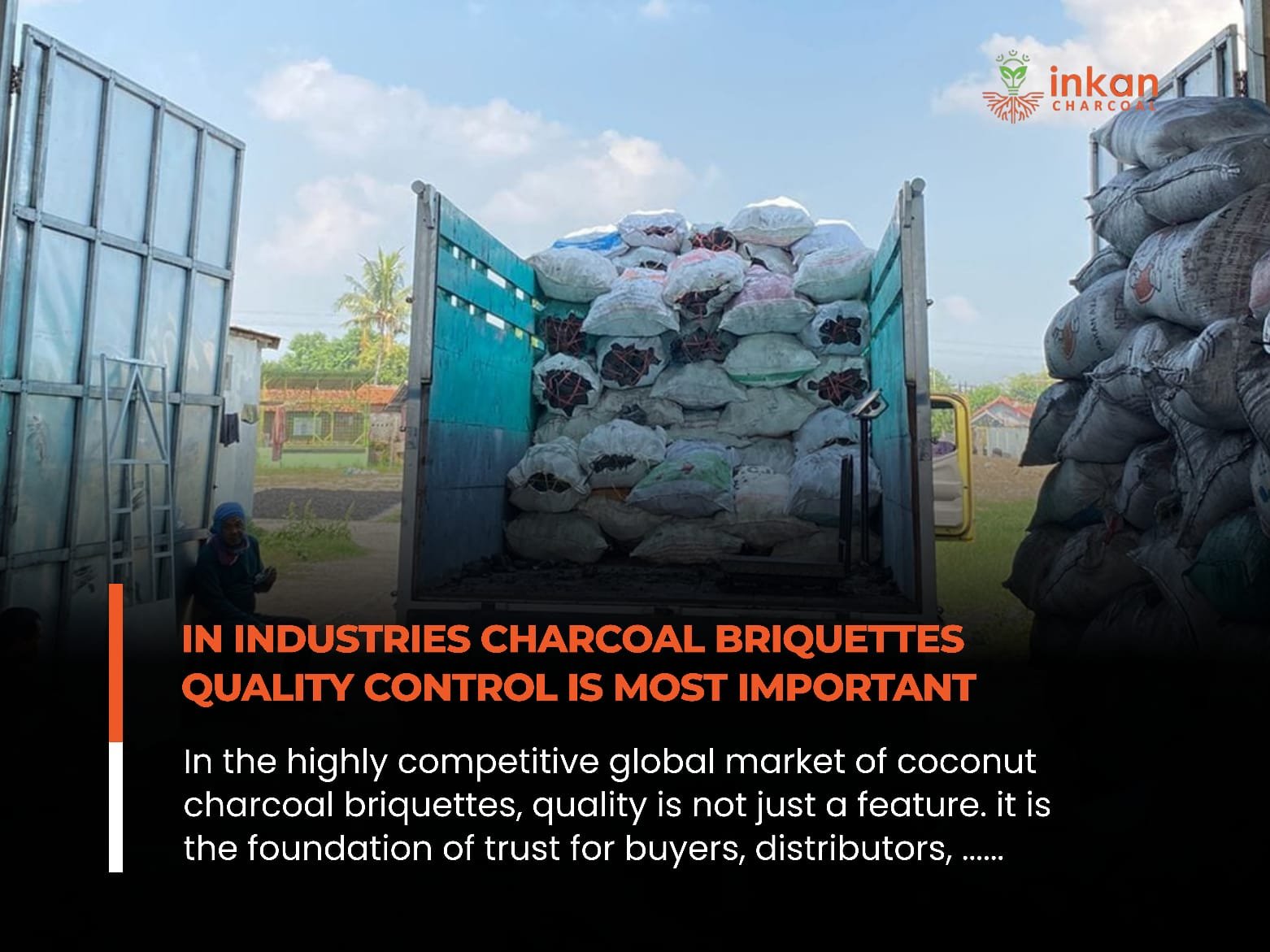
In the highly competitive global market of coconut charcoal briquettes, quality is not just a feature—it is the foundation of trust. For buyers, distributors, and shisha businesses, consistent quality determines long-term partnerships. This is why quality control (QC) plays the most critical role, starting from the selection of raw coconut shells to the final production process.
1. Strict Selection of Coconut Raw Materials
The journey of premium briquettes begins with the raw material: coconut shells. Not all coconut shells meet international standards. High-quality briquettes require:
- Mature coconut shells (typically 10–12 months old)
- Thick shell structure for higher carbon yield
- Low contamination (free from soil, fiber, and foreign materials)
- Proper drying before carbonization
Careful raw material selection ensures higher fixed carbon content, lower ash levels, and better burning performance. Poor-quality shells will directly impact the final product, leading to inconsistency and customer dissatisfaction.
2. Controlled Carbonization Process
Carbonization is the process of converting coconut shells into charcoal. This stage must be carefully monitored:
- Temperature control to achieve optimal carbon levels
- Even burning to avoid undercooked or overburned charcoal
- Smoke management to reduce impurities
Proper carbonization ensures the charcoal has high calorific value, low smoke, and minimal odor—key requirements for premium shisha use.
3. Crushing and Sieving Precision
After carbonization, charcoal is crushed into fine powder. Quality control at this stage includes:
- Uniform particle size for consistent briquette density
- Removal of impurities such as unburned particles or dust contamination
- Proper sieving to ensure smooth texture
Consistency in particle size directly affects the strength and burning stability of the briquettes.
4. Natural Binder Proportion Control
Premium briquettes use natural binders such as tapioca starch. The QC focus here includes:
- Correct binder ratio (too much causes smoke, too little reduces strength)
- Food-grade, eco-friendly materials
- Even mixing to ensure uniform composition
A well-balanced binder composition guarantees strong, durable briquettes without compromising performance.
5. High-Pressure Molding Process
The molding stage determines the shape, density, and durability of the briquettes. Quality control ensures:
- Consistent size and shape (cube, hexagonal, etc.)
- High density to achieve long burning time
- Smooth surface and minimal cracks
Uniform briquettes are essential for both performance and professional product presentation in international markets.
6. Optimal Drying Process
Drying is a critical step often underestimated. Proper QC includes:
- Controlled drying temperature
- Moisture content maintained below 5%
- Prevention of cracks or deformation
Low moisture ensures easy ignition and stable combustion, which are crucial for premium-grade products.
7. Final Inspection and Testing
Before packaging, every batch undergoes strict quality checks:
- Ash content testing (≤ 2.5%)
- Fixed carbon analysis
- Burning time and heat performance tests
- Drop test for durability
Only products that meet international standards are approved for export, ensuring reliability for buyers.
8. Clean and Hygienic Production Environment
Quality control is not limited to the product—it also includes the production environment:
- Clean facilities to prevent contamination
- Proper storage of raw materials and finished goods
- Compliance with international standards such as ISO and SGS
A controlled environment reflects professionalism and builds buyer confidence.